 Corfu Summer Institute
Binary compact objects on eccentric orbits and their gravitational-wave signatures

- The National Technical University of Athens
- The Ionian University
- The Municipality of Corfu
- The Regional Government of the Ionian Islands (Periphery of the Ionian Islands)
M. Agathos, D. Gerosa, R. Gamba, I. Romero-Shaw
The discovery of gravitational waves has opened an entirely new observational window on the Universe, and eccentric systems represent one of the most exciting frontiers. While most detected binaries to date are consistent with circular inspirals, there is mounting evidence that eccentricity may already be present in current events, with claims ranging from high-mass and low-mass black hole binaries to neutron star–black hole systems. Understanding, modeling, and interpreting eccentric sources is both timely and urgent.
The workshop will bring together experts in theory, numerical relativity, data analysis, and astrophysics, as well as younger researchers entering these fields. We aim to create a collaborative environment where participants can share results, exchange ideas, and identify the next key steps. Specific topics include:
- ◼ Waveform developments: progress in both analytic approximations and numerical relativity toward complete models that simultaneously capture precession, eccentricity, and merger.
- ◼ Eccentricity in current detections: assessing observational evidence, clarifying uncertainties, and discussing the astrophysical contexts where eccentricity is most promising.
- ◼ Astrophysical implications: moving beyond the traditional “eccentricity = dynamical formation” paradigm to explore correlations with mass, spin, and redshift, and their potential as smoking guns for formation channels.
- ◼ Population studies: evaluating how eccentric events fit into population models, and how results depend on definitions of eccentricity.
- ◼ Parameter estimation and searches: addressing statistical priors, correlations, and biases in inference, and identifying strategies to improve sensitivity to eccentric systems.
The Corfu Summer Institute will host this workshop. With facilities including projector screens, whiteboards, video-conference equipment, free wifi, and a large beautiful garden with tables and chairs for scientific discussion, the venue will support fruitful and exciting exchanges of ideas. Additionally, the registration fee of €350 (€250 for students) covers social events including welcome drinks in a scenic seaside location, the conference dinner, and cultural excursions. Furthermore, the Institute has special deals with local hotels, making attendance affordable.
This workshop will provide a unique opportunity for the gravitational-wave community to consolidate efforts on eccentric black hole binaries, a topic at the intersection of astrophysics, relativity, and data analysis. We expect its outcomes to guide future theoretical developments, data-analysis strategies, and observational discoveries.
- Registered Participants: click here
- Aug 31: Arrival/Registration day.
- Sep 07: Departure date.
- Detailed Programme: click here
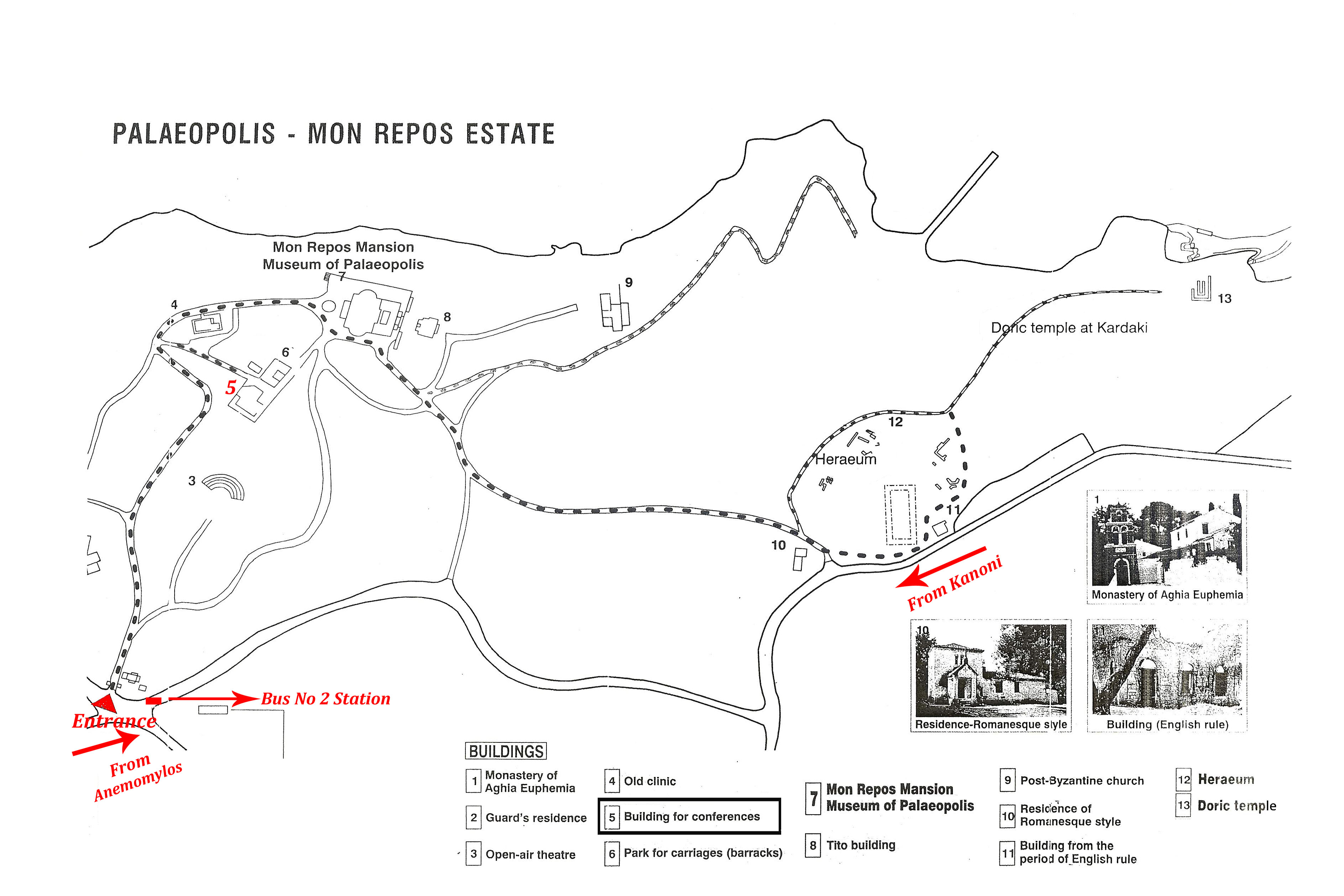
Mon-Repos, Corfu, Greece
(click here for a larger map, for a menu click on the top left icon of the map, GPS: geo:39.606101,19.926115)
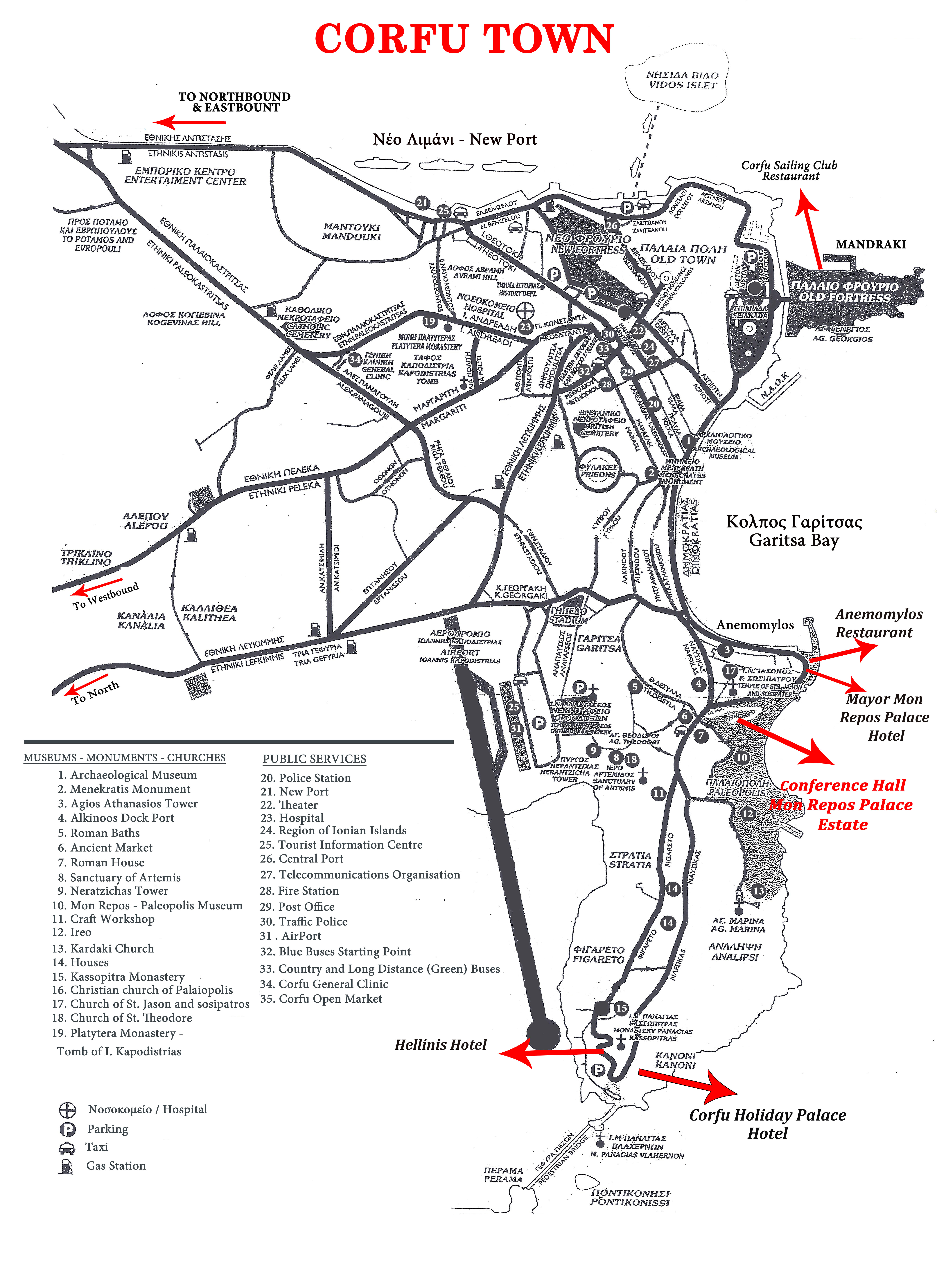
Guaranteed hotel availability is for a very limited time! Please make your hotel reservations ASAP!
Please register using the registration page, which is common for all Corfu events. The registration fee is 350€. For young researchers (students and 1st year postdocs) it is 250€. The fee is due on your arrival day. Payments may be transferred to the NTUA bank account shown in this form and the receipt emailed to Mrs Ifigeneia Moraiti.